Measure agent adoption where work ships
Agent activity becomes operational evidence when joined to shipped pull requests, review burden, and delivery timing. That join cannot prove ROI.
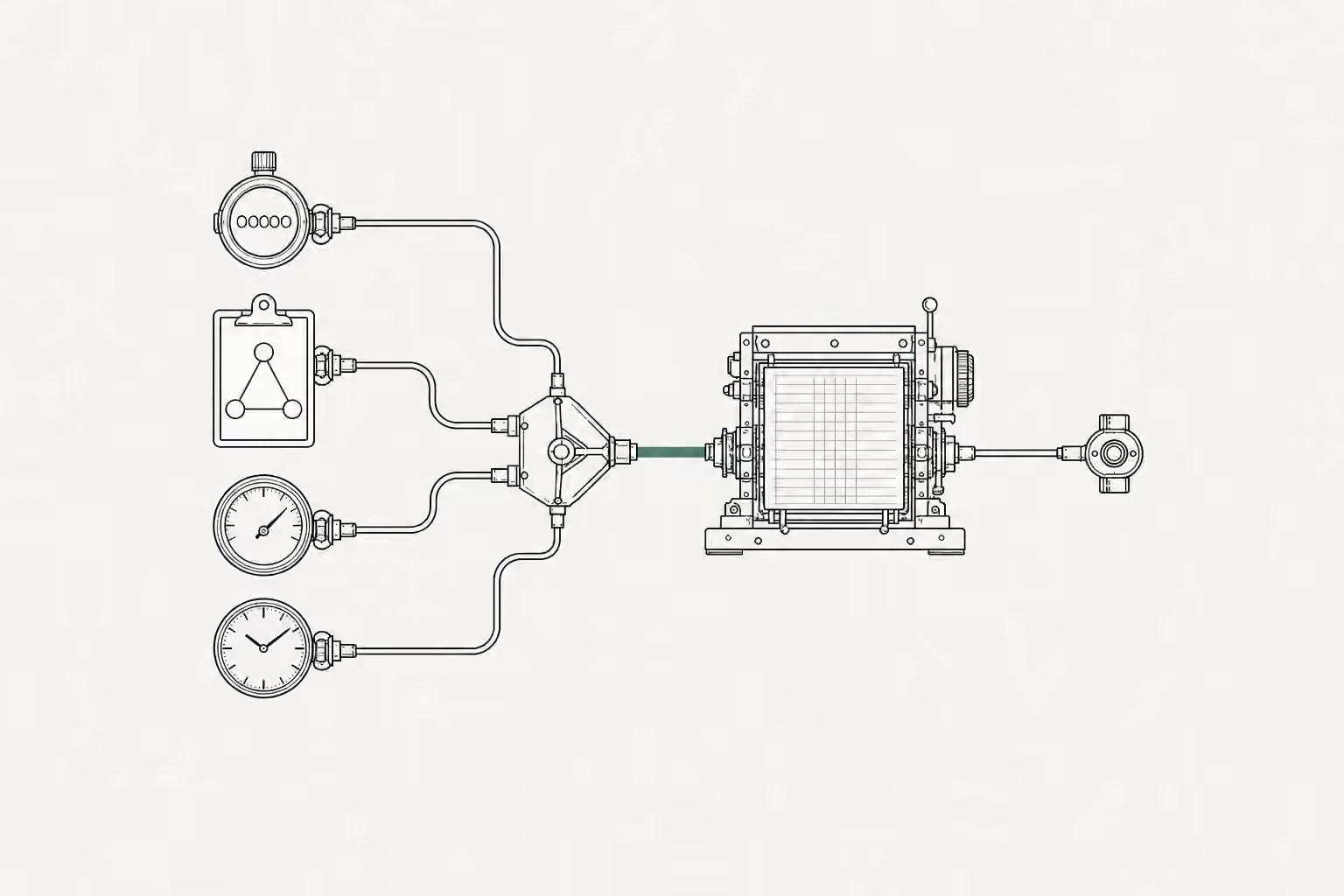
Prompt counts and usage receipts show activity. They become useful adoption evidence when an operator joins them to accepted work units, the review those units consumed, and the time they took to land. That join can expose an operating pattern. It cannot prove ROI or causality.
Start the record at the repository
GitHub’s repository-level Copilot usage endpoints report a daily, per-repository breakdown for enterprise and organization reports. One endpoint counts pull requests created and merged by Copilot coding agent. The other counts pull requests reviewed by Copilot code review, with suggestion counts broken down by comment type.
That scope matters. A prompt count says somebody asked for work. A created pull request says the activity produced a reviewable work unit in a named repository. A merged pull request says that unit crossed the repository’s acceptance boundary. None of those fields says the change was valuable, profitable, correct, or caused by the tool alone.
Suggestion counts add another layer. GitHub reports them by comment type alongside the daily count of pull requests reviewed by Copilot code review. They describe review output, not reviewer burden by themselves. Ten suggestions could catch ten consequential defects or generate ten minutes of triage. The count cannot decide which.
Keep burden and timing in their own columns
GitHub also reports avg_pull_requests_minutes_to_review, defined as the median minutes from pull-request creation to first review, and avg_pull_requests_review_cycles, defined as the median number of review submissions received before merge. The avg_ prefix is misleading if read casually. Both fields are medians, not arithmetic means, and GitHub compares them across Copilot adoption phases.
Both velocity metrics include only merged pull requests and attribute each pull request to its merge day; reviewed pull requests that never merge contribute to neither field. That makes the cohort useful for examining landed work and dangerous for diagnosing the whole queue. Abandoned, closed, and still-open work disappears from these two measures.
| Metric layer | What it can support | What it cannot support |
|---|---|---|
| Prompts and usage receipts | Activity and adoption frequency | Accepted output, value, or quality |
| Pull requests created and merged by coding agent | Daily repository-level work creation and acceptance | Why the pull request merged or whether it paid back |
| Pull requests reviewed and suggestions by comment type | Daily repository-level review activity and output mix | Human effort, finding quality, or remediation cost |
avg_pull_requests_minutes_to_review |
Median time to first review for merged pull requests | Unmerged queue delay or causal improvement |
avg_pull_requests_review_cycles |
Median review submissions before merge for merged pull requests | Review quality, change complexity, or causal improvement |
Join first, interpret second
The useful unit is a pull request with several attached records: activity that preceded it, whether it was created or reviewed by an agent, whether it merged, how much review it drew, and how long its path took. Compare like repositories and like classes of change. Keep open and abandoned work visible beside the merged cohort. Watch distributions and exceptions instead of compressing the fleet into one adoption score.
Even then, the dashboard shows association. Repository mix, change complexity, team practice, staffing, policy, and selection effects can move the same fields. A lower median time to first review after adoption is a reason to investigate the workflow, not a savings claim. ROI needs costs and valued outcomes. Causality needs a design that can rule out competing explanations.
GitHub is neither a Muniment customer nor an endorser. Its releases are useful public evidence because the fields let operators connect tool activity to shipped work without pretending the join answers every question. The honest measurement system leaves some cells unresolved.