The agent platform is a control plane
AWS Loom shows why identity, deployment policy, registry review, usage records, and approval gates are becoming shared platform responsibilities.
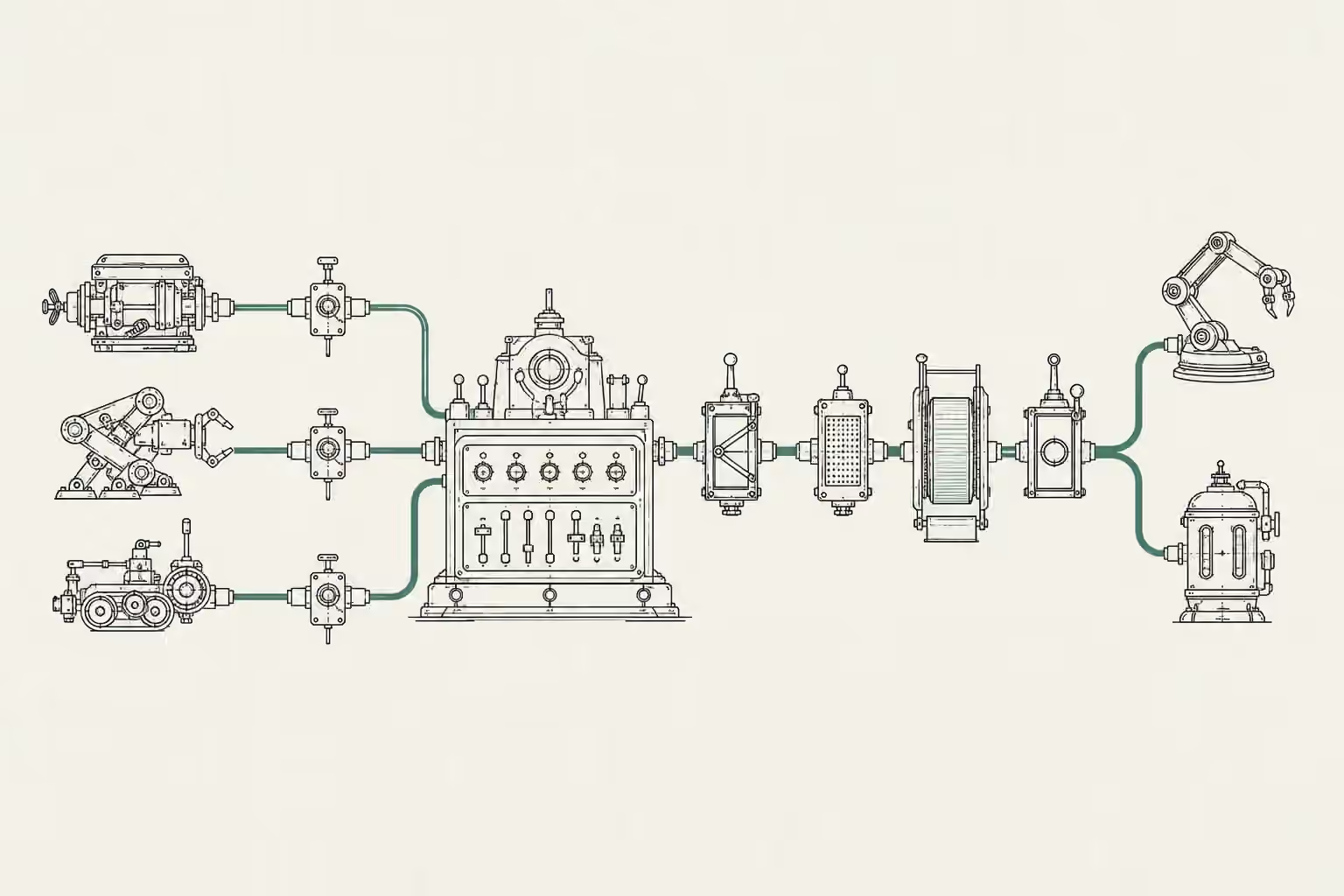
Agent deployment has become a control-plane problem for platform engineering. Teams can let each application choose its behavior, tools, and memory. Identity propagation, deployment policy, ownership, review, usage records, and approval gates need one governed path that operators can inspect. AWS Loom is useful evidence of that architectural split because AWS has put those concerns into a shared platform rather than another agent template.
The shared layer owns durable controls
AWS describes Loom as a unified management UI and backend API with identity-provider integration, scope-based authorization, usage tracking, and lifecycle management for agents, memory, MCP servers, and A2A integrations. Those are fleet concerns. Reimplementing them inside every agent makes policy drift an application feature.
The control plane becomes concrete at deployment. AWS says Loom requires application, group, and owner tags on every resource it deploys, while its API exposes only system-allowed deployment parameters. That post says delegated token exchange carries the end user and agent identity downstream, registry integration adds review before publication for production use, and approval hooks can stop sensitive tool calls for human review. These are AWS’s descriptions of Loom’s design. It does not establish that a deployment is correctly configured or that the controls produce a particular security outcome.
The implementation makes the platform boundary re-verifiable. AWS’s first-party repository documents separate backend, frontend, agent, and shared infrastructure areas, alongside lifecycle operations for agents and opt-in registry governance. A platform team can inspect that boundary as code instead of inferring it from a product diagram.
Buy the control surface or own its upkeep
The build-versus-buy boundary sits between shared governance and application-specific behavior. An agent team should still own instructions, tool semantics, evaluation, and the decision about when its workflow needs a person. A platform team should own the mechanisms that must remain consistent across teams: identity, allowed deployment parameters, resource ownership, registry state, cost attribution, and the enforcement point for approvals.
Building that shared layer can be rational when an organization needs a distinct authority model, deployment substrate, or evidence contract. The bill includes more than an API and dashboard. It includes policy migrations, identity integration, review workflows, usage accounting, and lifecycle operations as agents and tools change.
AWS’s author says implementing paved-path blueprints for new services and patterns can require months of research, implementation, and validation. That is an AWS-authored estimate, not an independent benchmark. The post supplies no comparative delivery study, adoption measure, performance result, or independently evaluated security outcome. Its value is narrower: it exposes the amount and shape of control-plane work AWS believes a governed agent platform should absorb.
A reference architecture is still a claim
Loom does not prove that every organization should adopt this implementation. AWS presents it as an opinionated example for platform-engineering teams building on AWS managed services, and the repository publishes the implementation operators can inspect. The post provides no independent evidence of customer adoption, production reliability, performance, or security outcomes, and neither does the repository.
AWS is neither a Muniment customer nor an endorser. Loom earns attention because its control-plane shape is inspectable: shared authority and lifecycle machinery surround replaceable agent behavior. Operators choosing to build should be prepared to own that machinery after the first deployment, when the months become maintenance.
Sources
- AWS: Building secure AI agents at scale: Introducing Loom for AWS aws.amazon.com
- AWS Labs on GitHub: Loom for AWS github.com