A fleet of task agents needs shared controls
AWS and OneAdvanced report that over 50 task agents reached production. Shared deployment, configuration, model, and data controls made the fleet possible.
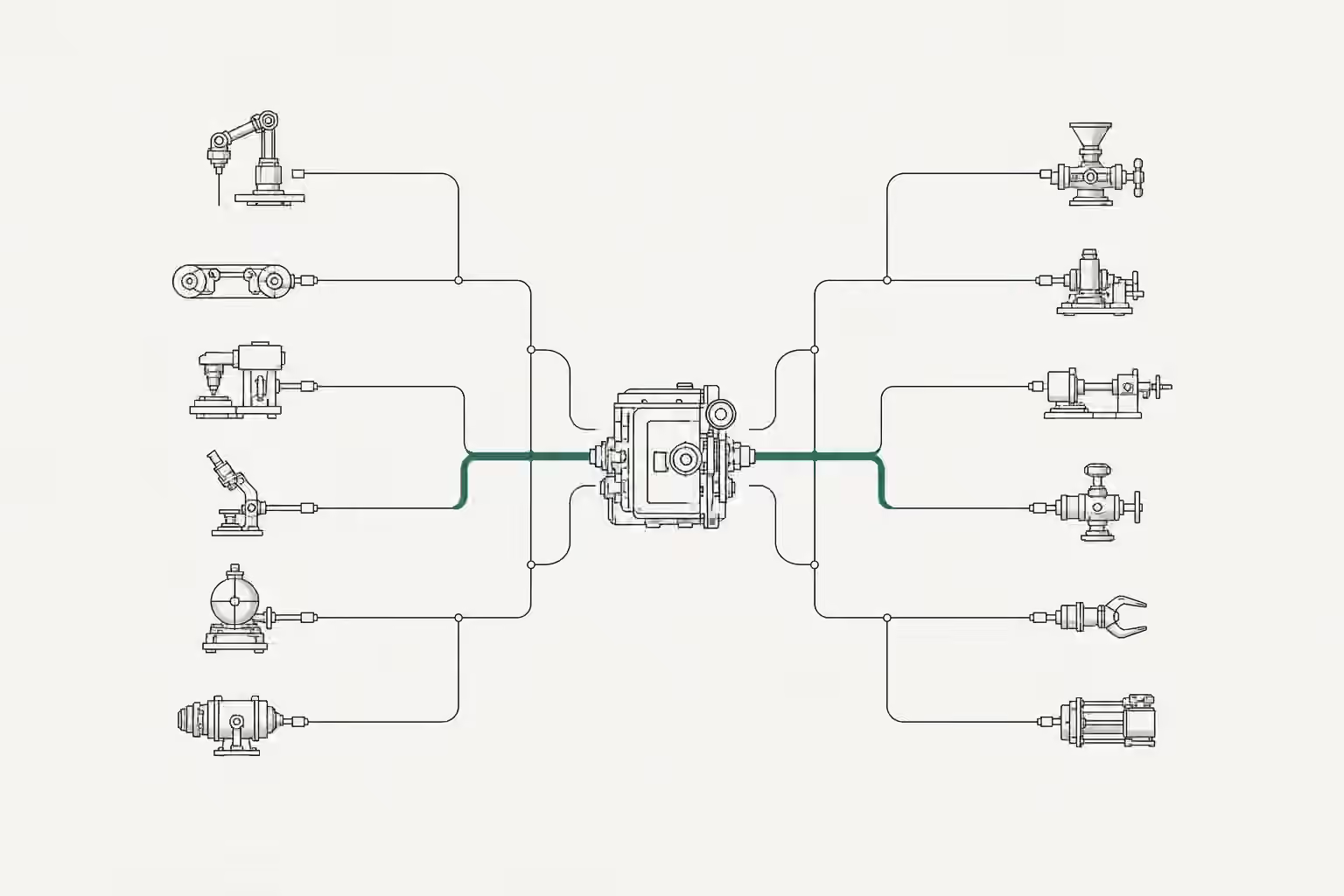
A fleet of task agents needs shared controls before its size becomes useful. AWS and OneAdvanced report fast delivery across more than 50 agents. The stronger evidence sits underneath that count. One deployment path, configuration store, model service, and residency rule support the whole fleet.
Three terms keep the claim precise:
- Agent: a program that takes steps and calls tools.
- Model service: the organization serves the model on machines it operates, not through an outside endpoint.
- Data residency: the rule that data stays inside a named country.
Fleet count is a scale claim
AWS and OneAdvanced report that over 50 task-specific agents run on Amazon ECS. The catalog covers health care, legal, human resources, marketing, logistics, and other work. OneAdvanced also serves over 10,000 customers, according to the same joint post.
Those figures describe fleet size and company reach. They do not measure task quality, customer adoption by agent, or business results.
Delivery speed needs a common path
AWS and OneAdvanced say the library grew from its first agent to over 50 in three weeks. They also say most agents took less than a day to build.
That speed is a reported delivery result, not an independent benchmark. The post provides no distribution of build times or definition of finished. It still shows why fleet controls cannot arrive after agent creation. A team adding agents daily needs the common path on day one.
Shared controls make the catalog operable
AWS and OneAdvanced describe each agent as a system prompt, tools, and an optional input form stored in Amazon DynamoDB. Amazon ECS runs the agents. A shared tool library gives them approved capabilities. That design separates task instructions from the machinery that deploys, configures, and serves the fleet.
The same post says OneAdvanced serves Llama 4 Maverick and Llama Guard 4 through Amazon SageMaker in London. Its named region is eu-west-2. AWS and OneAdvanced say Llama Guard checks input before the main model runs.
The reported evidence fits one control surface:
| Fleet concern | AWS and OneAdvanced report |
|---|---|
| Agent runtime | Over 50 task-specific agents on Amazon ECS |
| Agent configuration | System prompt, tools, and optional input form in Amazon DynamoDB |
| Model service | Llama 4 Maverick and Llama Guard 4 on Amazon SageMaker |
| Named region | London eu-west-2 |
The shared path matters because every new agent inherits the same places for configuration, model access, input checks, and residency. A large catalog without those controls creates many separate policy surfaces.
Toyota reports a second fleet on one platform
The vendor LangChain wrote this case study about its customer Toyota. Every Toyota figure in this section is company-reported, not an independent measurement.
Toyota says its internal ToyotaGPT platform runs more than 50 agents in production. Toyota representatives report that delivery fell from six months and six engineers to four days and one engineer. Those claims put a second fleet on one common production path.
The case study links the shared platform to reusable skills, permission checks, traces, and a model gateway. A harness is the software around a model that supplies tools, rules, memory, and records. A skill is a reusable package of instructions and domain knowledge. A trace is the ordered record of one agent’s model calls, tool calls, and outputs. A gateway routes requests to models and can switch providers during an outage. Permission checks keep an agent from showing data its user cannot access.
The case study says GearPal cut equipment diagnosis from five or six hours to two or three minutes. That company-reported result lacks an independent benchmark or a published test method.
Toyota and LangChain neither use nor endorse muniment. Their public case supplies a second example of a fleet built on shared controls.
Production tenure is a separate report
AWS and OneAdvanced say the service has run in production since July 2025. They report that it has served customers for over a year. These claims describe reported production tenure. They do not verify availability, workload volume, or outcomes.
AWS and OneAdvanced are neither Muniment customers nor endorsers. Their joint post supplies public evidence, and Muniment draws the control-plane conclusion from it.
A fleet can grow in three weeks. Its authority, configuration, and records must remain shared for much longer. Teams building that operating path can join the waitlist.