Tests without layout cannot see the fold
A unit suite can confirm that controls exist while missing whether the window puts them within a user’s reach.
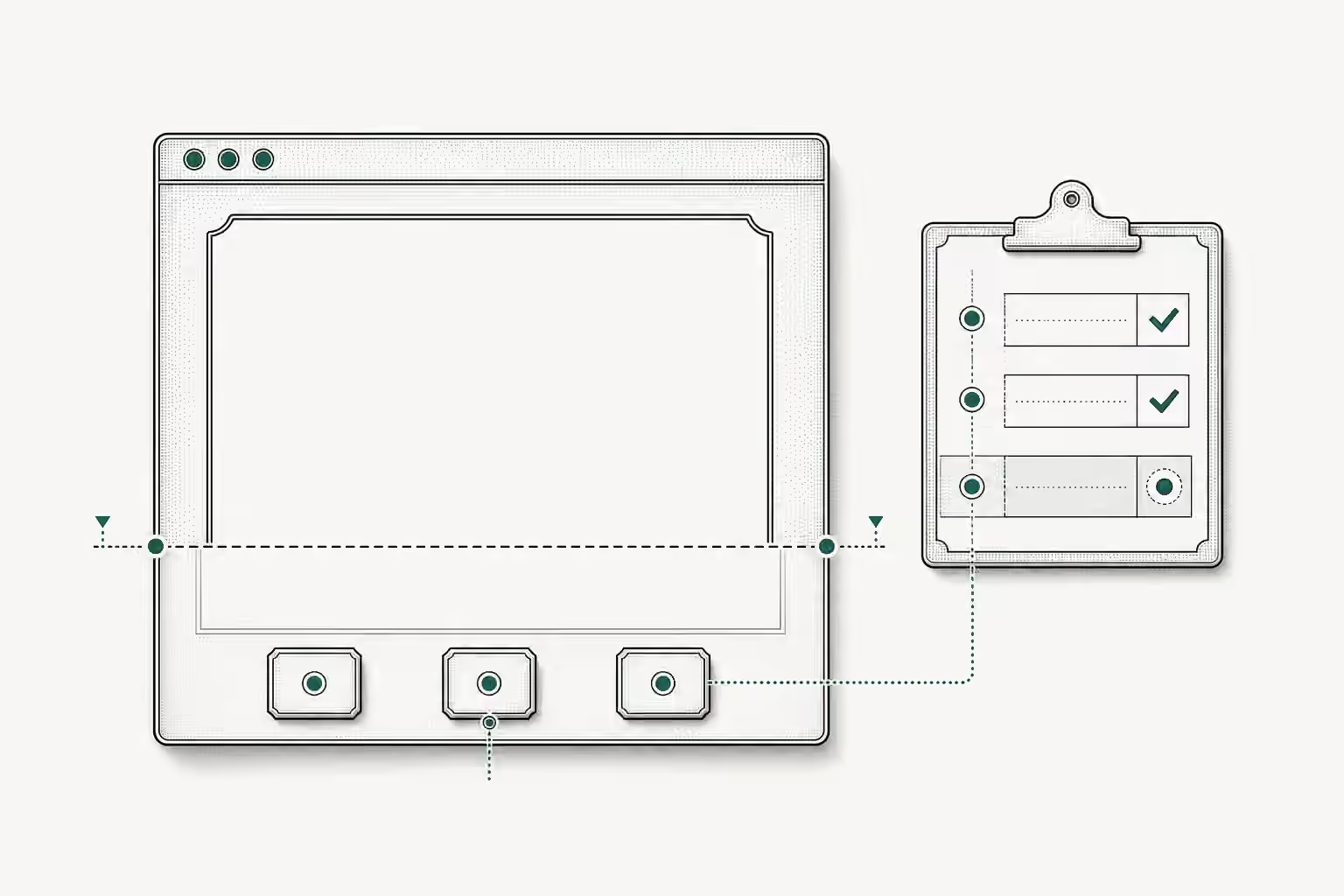
A test layer without layout can prove that a control exists while missing whether a user can reach it. Our Muniment Desktop evidence found three such failures behind green test totals.
Green totals could not measure the window
Our fast unit suite runs the interface inside a DOM emulator with no layout engine. The note does not name that emulator.
The jsdom README provides the vocabulary for this limit: it does no layout or rendering and returns zeros for many layout properties.
That behavior does not identify our emulator. It explains why DOM presence and visual reachability require different checks.
The unit suite passed 661 tests across 40 files. Across 52 binaries, the native core suite passed 640 tests. Neither total exposed a layout defect.
| Case | What the test layer saw | What rendering found |
|---|---|---|
| Profile panel | Three unit tests clicked the sign-out button | The panel extended past a 720-pixel window |
| First-run actions | The three controls existed | They sat at 685 through 717 pixels against a 640-pixel fold |
| Reply rule | The style existed | One rule appeared on three line boxes |
The signed-out lockup exposed another boundary. Nightly screenshots exclude rendered conversations for privacy, so they never showed the lockup behind a live conversation.
The probe gives layout a witness
We did not add a browser to the merge gate because our build runner has no browser installed. We split the checks around that limit.
A source-reading lint catches markup that names a class without a matching rule. A color allowlist enforces the palette. Neither check detects these layout defects.
Our probe harness serves the built bundle against a stubbed native bridge. Six fixture states expose the three layout cases for rendering and measurement in headless Chromium.
Rendering found the panel past the window, the actions below the fold, and the rule repeated across three line boxes. Those measurements supplied evidence the green suites could not.
The probe remains an on-demand tool
No merge gate runs the probe. It catches only the cases that a person or an agent chooses to render.
The probe measures no performance. Its stubbed native bridge is not the real application, so it finds only defects that survive stubbing.
The onboarding overflow remains open because its container still lacks the selected scrolling layout. Available evidence therefore records a known failure, not a completed defense.
This evidence comes from our Muniment Desktop note pinned to commit 0b3f902fe24d409ddeb3.
Name the test layer that can see the defect class before writing the test. A layout engine must answer whether a user can reach a control.
Sources
- jsdom README github.com